I don't know what it was, but something must have shifted. The Economist covers "Liberation technology | Mobiles, protests and pundits" in its latest issue.
Remember the anti-cartoon protests across the Muslim world earlier this year? Well, apparently many of them organized via cellular phones - a technique known as "flash mobbing" or "smart mobbing."
Seems collective action is much easier when people can communicate (and thus coordinate) their efforts. It's also probably a lot easier to identify leaders (e.g., phone records)...
Are cell phones producing a qualitative shift in our capacity to remain informed and engaged (or monitored and controlled) as citizens? I suspect these forms of tech-enable activism and surveillance will only become more significant with time.
Either way, it seems a very fertile area of study for political science. Anyone aware of any nascent dissertations on the subject(s)?
10.28.2006

10.27.2006
Easy web surveys
For those studying issues where the varied sampling and response biases associated with Internet-based polls are not especially problematic, Icebrrg offers yet another way to generate and disemminate surveys.
Try it out for FREE, or subscribe (rates start at $9/mo) to begin collecting data (can be exported to MS Excel).
Try it out for FREE, or subscribe (rates start at $9/mo) to begin collecting data (can be exported to MS Excel).
Hacking the vote
You need to read this article.
Jon Stokes has written a very detailed, very compelling overview of exactly how simple and straightforward it is to alter how electronic voting machines tabulate votes.
 Before you say that's just a paranoid delusion, ask yourself whether it sounds plausible that one person could cause hundreds of millions of dollars damage to American businesses and households. Then think about the anonymous hacker whose cooking up the next worm or virus that will turn your computer into a big ugly paperweight.
It's truly worth a read.
Jon Stokes has written a very detailed, very compelling overview of exactly how simple and straightforward it is to alter how electronic voting machines tabulate votes.
Before you say that's just a paranoid delusion, ask yourself whether it sounds plausible that one person could cause hundreds of millions of dollars damage to American businesses and households. Then think about the anonymous hacker whose cooking up the next worm or virus that will turn your computer into a big ugly paperweight.It's truly worth a read.
10.25.2006
Software for qualitative analyses
For the past couple of years, UM's Consortium on Race, Gender and Ethnicity has sponsored talks and workshops by the Qualitative Research Interest Group. At the end of this month and November they will be hosting talks on Data Analysis in Qualitative Work: Software Options.
1-3pm Tues, Oct 31: Kevin Roy (UM Dept of Family Studies) will discuss "QSR Nudist*: Building a toolbox for management and analyses of qualitative data." * now known as NVivo
1-3pm Thursday Nov 30: Michael Paolisso and Shawn Maloney (UM Dept of Anthropology) will present "Using ATLAS-TI with Qualitative Data: An informal demonstration and conversation."
All are welcome, refreshments provided.
1-3pm Tues, Oct 31: Kevin Roy (UM Dept of Family Studies) will discuss "QSR Nudist*: Building a toolbox for management and analyses of qualitative data." * now known as NVivo
1-3pm Thursday Nov 30: Michael Paolisso and Shawn Maloney (UM Dept of Anthropology) will present "Using ATLAS-TI with Qualitative Data: An informal demonstration and conversation."
All are welcome, refreshments provided.
10.24.2006
Cross the virtual aisle
RedBlue bills itself as an "an exciting yet safe way to engage directly with someone on “the other side” of the political spectrum."
The idea is to pair participants with their ideological counterparts, then provide an opportunity for constructive dialogue by having each read a fictional scenario and then for them to engage each other in a computer-facilitated discussion. Apparently, the "moderator" is designed to help participants avoid dead-ends, to help them find common ground.
RebBlue is now accepting beta-testers (embedded request at bottom).
Sounds like an interesting experiment, though I imagine participants would have a selection bias towards moderates. I wonder whether such techniques would have much effect at all on the more ideologically extreme.
The idea is to pair participants with their ideological counterparts, then provide an opportunity for constructive dialogue by having each read a fictional scenario and then for them to engage each other in a computer-facilitated discussion. Apparently, the "moderator" is designed to help participants avoid dead-ends, to help them find common ground.
RebBlue is now accepting beta-testers (embedded request at bottom).
Sounds like an interesting experiment, though I imagine participants would have a selection bias towards moderates. I wonder whether such techniques would have much effect at all on the more ideologically extreme.
10.23.2006
Chicago voter db hacked
According to ABC News, the Illinois Ballot Integrity Project has hacked the Chicago Voter Database, giving them access to voter data such as SSN and DOB, but also potentially allowing them to change voters' status to "inactive," which would prevent those persons from voting (absent an undetermined intervention).
Problematic, to say the least.
What exactly is our Constitutional recourse here?
Problematic, to say the least.
What exactly is our Constitutional recourse here?
The ultimate online lecture
This is what college must look like down the rabbit hole. On Saturday, the New Media Consortium hosted an lecture by Howard Rheingold - in Second Life.
 For those of you who have better things to do with your time, Second Life is a "3-D virtual world entirely built and owned by its residents" (1,097,244 members as of today). Think of it as a proto-Matrix, without Mr. Smith.
Mr. Rheingold was speaking (mp3) on the "Pedagogy of Participation," arguing that changes in informational and communications technology produce new forms of civic engagement, and this co-evolution generates new expectations (over time) about what is effective participation.
Even though I doubt Congress will be holding virtual floor debates anytime soon, it struck me as an interesting innovation, and an interesting talk. Weird, but interesting.
For those of you who have better things to do with your time, Second Life is a "3-D virtual world entirely built and owned by its residents" (1,097,244 members as of today). Think of it as a proto-Matrix, without Mr. Smith.Mr. Rheingold was speaking (mp3) on the "Pedagogy of Participation," arguing that changes in informational and communications technology produce new forms of civic engagement, and this co-evolution generates new expectations (over time) about what is effective participation.
Even though I doubt Congress will be holding virtual floor debates anytime soon, it struck me as an interesting innovation, and an interesting talk. Weird, but interesting.
Public opinions online
This could be rather handy. Someone at the Association of College and Research Libraries has put together a listing of public opinion polls Websites from around the world.
One-stop shopping for polling results from AP, NYT, Gallup, Zogby, or dozens of other polling organizations.
One-stop shopping for polling results from AP, NYT, Gallup, Zogby, or dozens of other polling organizations.
10.20.2006
Rethink interfaces
I've talked about this sort of thing before, but NYU researcher Jeff Han has made the multi-point, intuitive monitor-based interface real.
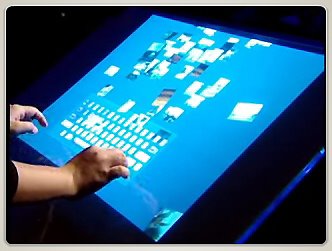 I know you're thinking "what the heck does this have to do with social science research?" Well, if you've made the jump to dual monitors, you probably understand how even small interface changes can dramatically improve usability.
Check out the video - it's about 5 min (I especially recommend the first half).
I know you're thinking "what the heck does this have to do with social science research?" Well, if you've made the jump to dual monitors, you probably understand how even small interface changes can dramatically improve usability.
Check out the video - it's about 5 min (I especially recommend the first half).
10.17.2006
Not about research, really
My apologies. But anyone who's worked on team projects (that involve meetings) can appreciate this: Doodle enables users to identify a set of dates and times, and then invite (potential) participants to register their choices online.
Kinda cool.
Addendum: My bad - of course it's about research. How many of us have been tortured by the madness of getting a full committee together for a prospectus or dissertation defense? I don't know what I was thinking.
Kinda cool.
Addendum: My bad - of course it's about research. How many of us have been tortured by the madness of getting a full committee together for a prospectus or dissertation defense? I don't know what I was thinking.
10.13.2006
Online doc and spreadsheet editing
I think I mentioned Google's online spreadsheet editor before. Well, now they've gone and added word processing to the mix.
Many standard formating and editing features, works on and exports as Word, OpenOffice, RTF, html, or text documents, versioning...
Perhaps the coolest is the ability to grant online editing access to others. Combined with a similar new feature in Google Notebook, it's looking like Google is becoming the way to go for collaborative projects.
Many standard formating and editing features, works on and exports as Word, OpenOffice, RTF, html, or text documents, versioning...
Perhaps the coolest is the ability to grant online editing access to others. Combined with a similar new feature in Google Notebook, it's looking like Google is becoming the way to go for collaborative projects.
10.05.2006
Share PPoints
This is potentially very interesting: SlideShare is an online repository for PowerPoint (and related) slideshows. Members can post presentations, which are then converted to a FlashMedia format by SlideShare gnomes.
While it doesn't appear possible to download others' presentations, you can either link directly to them, or embed them within your own webpages (e.g., blogs). Actually, that may be worth the price of admission alone.
While it doesn't appear possible to download others' presentations, you can either link directly to them, or embed them within your own webpages (e.g., blogs). Actually, that may be worth the price of admission alone.
Genealogy of influence
This likely has more pedagogical than methodological import, but a clever coder by the name of Mike Love has put together a variety of dynamically linked concept maps that (proport to) show the major intellectual influences of a select set of "philosophers, social scientists, writers,
artists, scientists, and mathematicians."
The content is interesting (who knew Neitzsche was so popular?), but what I find especially compelling is the software. Imagine how it might be used, from initial brainstorming to more informed research, with users determining the relationships and embedding content on nodes or links.
Worth five minutes of your time, certainly.
artists, scientists, and mathematicians."
The content is interesting (who knew Neitzsche was so popular?), but what I find especially compelling is the software. Imagine how it might be used, from initial brainstorming to more informed research, with users determining the relationships and embedding content on nodes or links.
Worth five minutes of your time, certainly.
Mobile media in politics
Smart Mobs recently blogged about a new report by the New Politics Institute, on "Mobile Media in 21st Century Politics."
Rob Sebastian and Tim Chambers, who authored the report, argue that anyone wanting to stay on top of the game should educate themselves about "mobile media," start gathering mobile phone numbers as soon as possible (there go my minutes...), etc.
Considering how many of us won't even go to the restroom without our cell phones, I suspect private space is about to get even rarer.
Backlash, anyone?
Rob Sebastian and Tim Chambers, who authored the report, argue that anyone wanting to stay on top of the game should educate themselves about "mobile media," start gathering mobile phone numbers as soon as possible (there go my minutes...), etc.
Considering how many of us won't even go to the restroom without our cell phones, I suspect private space is about to get even rarer.
Backlash, anyone?
DHS data mining techniques
No, really. The Dept of Homeland Security's Inspector General's Office recently published its Survey of DHS Data Mining Techniques.
They identified 12 datamining "systems and capabilities" within DHS, 9 of which are currently operational. These include "Expert Systems," "Association Processes," "Threat and Risk Assement Tools," "Collaboration and Visualization Processes," and "Advanced Analytics."
Sounds like they're not exactly sure what they mean by data mining.
They identified 12 datamining "systems and capabilities" within DHS, 9 of which are currently operational. These include "Expert Systems," "Association Processes," "Threat and Risk Assement Tools," "Collaboration and Visualization Processes," and "Advanced Analytics."
Sounds like they're not exactly sure what they mean by data mining.
10.04.2006
IT and the University
This interesting book can be read online:
Preparing for the Revolution: Information Technology and the Future of the Research University
Preparing for the Revolution: Information Technology and the Future of the Research University
E-Tabs - Reporting Software
E-Tabs is software designed to expedite what I found to be one of the most monotonous and frustrating aspects of a research project: taking raw statistical output and converting it into analyzable format or attractive tables and graphs.
Association for Survery Computing Software Register
The ASC's Software Register is 94 pages of general information about hundreds of qualitative and quantiative social research software. It is now also available (and regularly updated) online.
NCeSS "Replaytool"
"Replaytool" is a software tool being developed by the Digital Record for e-Social Science (DReSS) department of the National Center for e-Social Science (NCeSS). I saw this demo'd in London last week: it enables the replay and annotation of (time-based) social science data sets, including simultaneous synchronized replay of multiple data sources, including videos, sytem log files, and spatial data. It is already being used to test consumer uses of new software, for development purposes, but one can imagine several applications for studies of other types of social interaction. A paper explaining the project is now available.
Subscribe to:
Posts (Atom)